
Your Life Is the Canvas: The Art of Processing Emotions
How to Process Emotions: What Is the Process for “Processing”?
How do we find time to sit beside ourselves in a world that demands immediacy, productivity, and constant presence? Let’s get digging.
The Beauty of Processing Emotions

Let’s start here: processing is good.
Not only is it good—it’s one of the most critical mental health practices we can develop.
Think about the amount of input our brains receive every single day:
social interactions, media consumption, advertising, responsibilities, expectations, and our often ambiguous emotional responses to the world around us.
Emotional processing isn’t something that happens to us, nor is it some kind of mental “defragmentation” (I’m aging myself as an 80s/90s millennial). Instead, it’s an intentional practice—one that supports self-awareness, meaning-making, and emotional regulation.
When we process regularly, we reduce the likelihood of becoming emotionally overwhelmed and better prepare ourselves for life’s inevitable challenges.
Why We Avoid Processing Until Things Fall Apart
For many people, emotional processing is reserved only for major life events—loss, trauma, conflict, or crisis. While processing during those moments is essential, waiting until everything collapses leaves us unprepared.
Daily processing helps us:
Build emotional awareness
Stay grounded instead of reactive
Improve day-to-day emotional functioning
Small, consistent moments of reflection strengthen our capacity for the bigger moments.
Feelings… Yuck!
Let’s be honest: processing is hard.
Processing emotions means sitting with what’s uncomfortable—ourselves.
It means slowing down, being still, and acknowledging experiences we often deny or suppress.
The goal isn’t to create or force a particular emotion. The goal is simply to notice what’s already there.
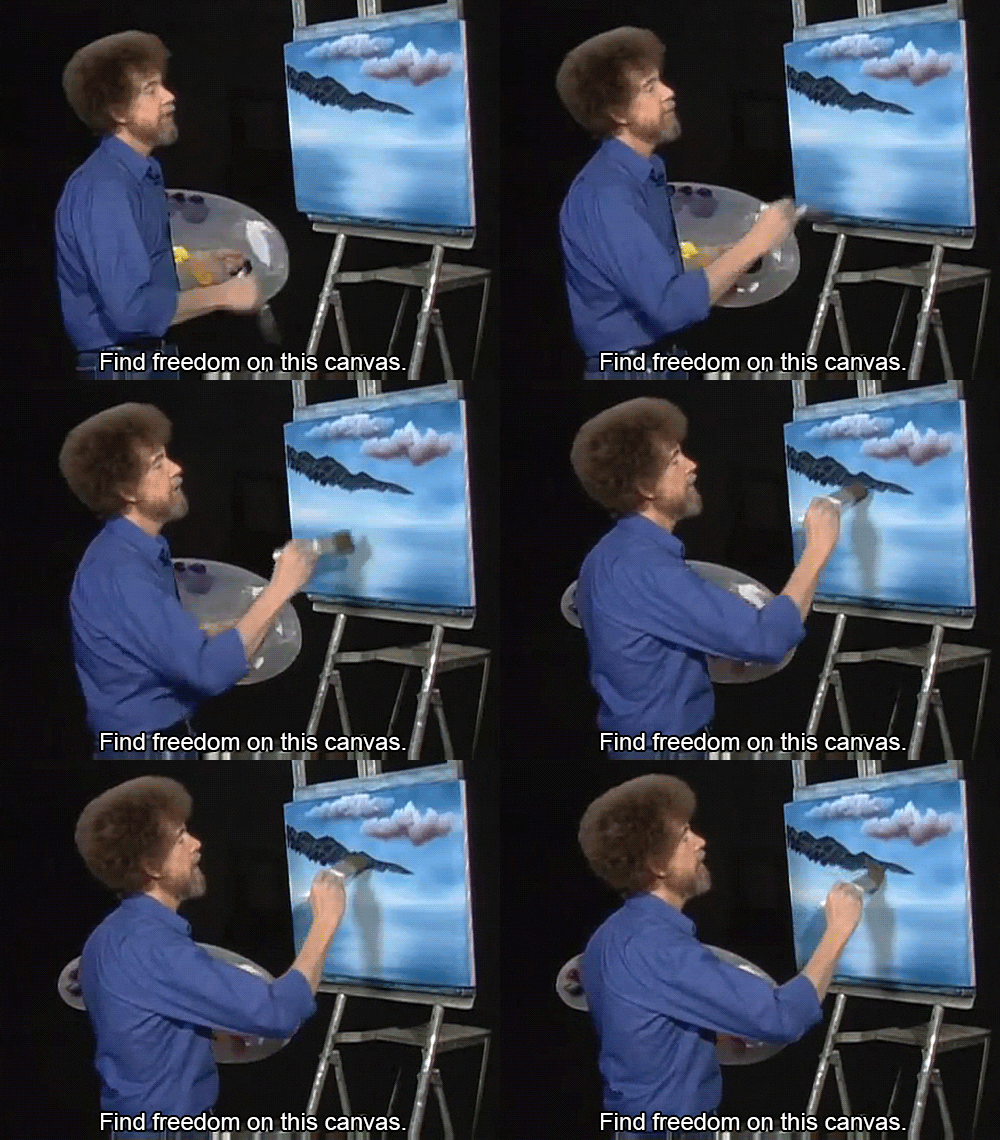
A Painting Metaphor
If life were a painting:
Our daily events would be the sketch
Our emotions would be the color
Some days the colors are vibrant. Other days they feel dull, muted, or chaotic. But describing what we see—without judgment—helps us decide how we want to paint what comes next.
The colors don’t always make sense.
But they’re what make the painting uniquely yours.
Do Not Throw That Away
Stop.
Pause.
Step away from the trash receptacle.
Unball that crumpled canvas in your hands.
Yes, the trash can is full. You keep taking it out, but somehow the garbage truck never seems to come. What you’re holding feels like trash—but what if something life-changing is inside?
What if what’s inside… is you?
Autopilot vs. Intention
As humans, we need routine and predictability to thrive. But routine can easily turn into autopilot.
Despite our desire to coast, every day brings:
New information
New interactions
New emotional experiences
When we take time to sit with our daily “works of art,” we gain clarity about:
Where we’ve been
Where we are
Where we’re going
We become more intentional—and better artists of our own lives.
Me? An Artist? Yes, You.
Professional artists often see themselves as:
Meaning-makers
Translators of emotion
Explorers of experience
They also live with tension: confidence in their vision alongside vulnerability about how their work will be received.
Sound familiar?
You don’t need to be a professional artist to live this way. Becoming an artist of your emotional life requires only two things:
Willingness to practice
Tolerance for discomfort and imperfection
The 6-Step Process to Effectively Process Emotions

Step 1: Notice & Name — Sketch the Outline
Before any masterpiece begins, the outline comes first.
Ask yourself:
What does this feeling feel like in my body?
Is it heavy, sharp, tight, restless?
Can I name it? Anxiety. Disappointment. Excitement.
Naming emotions gives shape to what’s on the canvas.
Tool:
Use a mood chart and label emotions several times a day. Add curiosity about why they may be present.
Step 2: Pause & Breathe — Clean the Brushes
Artists don’t rush colors without rinsing the brush.
Neither should you.
Tool:
Box breathing — inhale for 2, hold for 2, exhale for 2.
This pause clears your mental palette before reacting.
Step 3: Allow Without Judgment — Let the Color Sit
Some colors look muddy at first. Over time, they reveal depth.
Instead of labeling emotions as “good” or “bad,” let them exist long enough to understand their texture.
Tool:
Mindfulness practices help build tolerance for emotional presence without immediate action.
Step 4: Explore the Source — Step Back From the Canvas
Perspective matters.
Ask:
What triggered this feeling?
Is it about today—or an older, unfinished painting?
What story is this emotion trying to tell?
Understanding the source helps you decide how much work is needed.
Step 5: Express Safely — Put Paint to Canvas
Emotion becomes meaningful when expressed.
Options include:
Talking with a trusted person
Therapy
Journaling
Movement
Creating actual art
Choose a medium that allows expression without splattering onto someone else’s canvas.
Step 6: Integrate & Decide — Sign the Painting
Ask yourself:
What did I learn?
Does this require action, a boundary, or awareness?
Am I ready to move forward—or does this need more layers?
Every piece becomes part of your collection.
